LEARN · EXPLAINED
What is vertical farming?
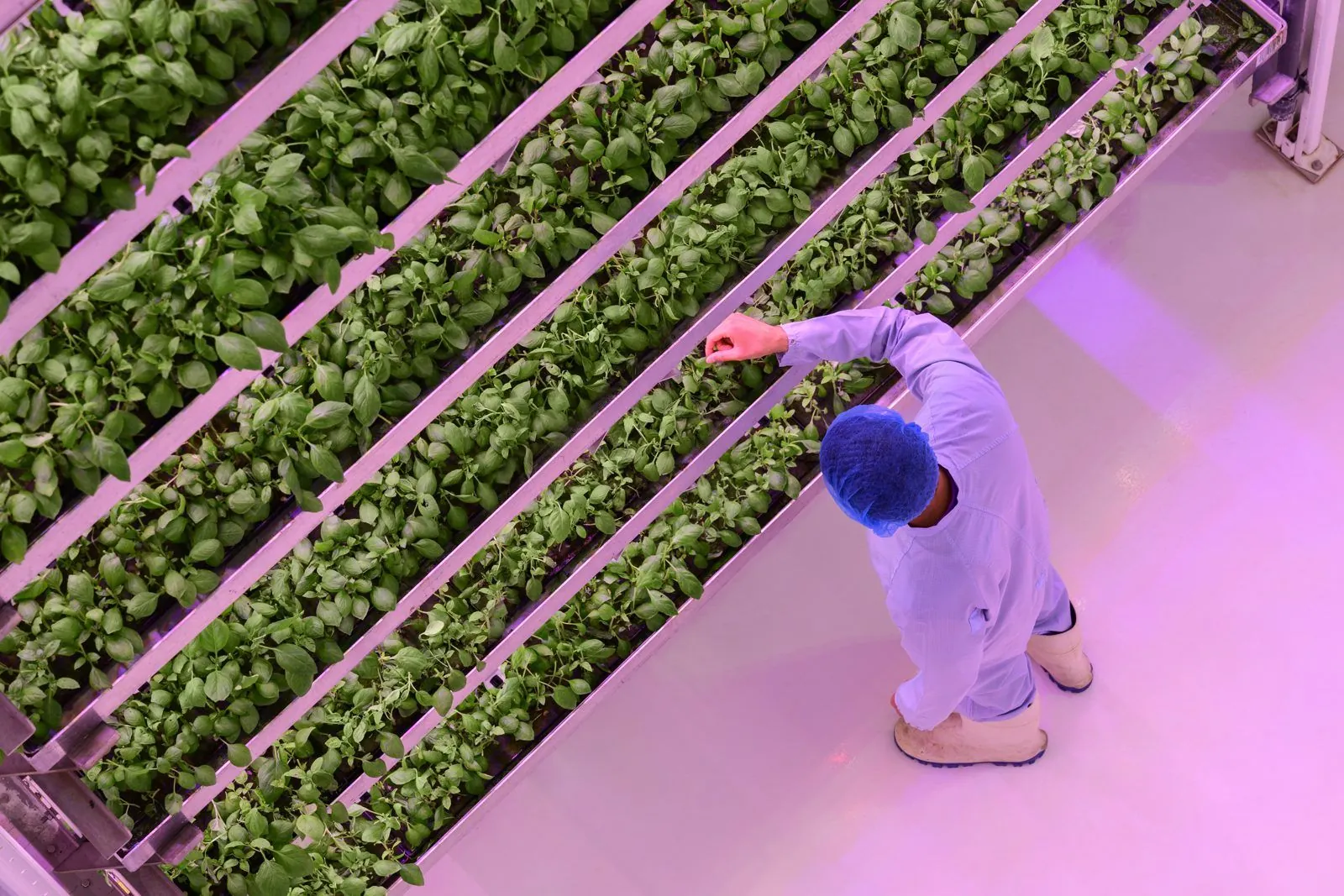
Vertical farming is growing crops in stacked layers indoors, under LED light, with the water and nutrients recirculated and the climate controlled. It grows upwards instead of outwards, runs all year, and can sit next to the people who eat the food. The catch is energy: the lights and climate control run on electricity.
THE SHORT VERSION
Good at some things, honest about others.
WHAT IT DOES WELL
- Grows all year, whatever the weather.
- Stacks crops in layers, so a small footprint holds a lot of growing space.
- Recirculates water and nutrients instead of losing them to the soil.
- Can sit close to where the food is eaten, so it travels less.
- A closed room keeps most pests out, so pesticides are rarely needed.
THE TRADE-OFFS
- Energy is a real cost: lights and climate control run on electricity.
- It suits small, fast, high-value crops, not potatoes or wheat.
- Farms that sold their own produce have struggled. Grow for a buyer you already have.
- Our own water and yield figures come once our first container has run a full year.
WHAT GROWS
Small, fast and valuable.
Cycle times are standard hydroponic practice, not our own measured output. Heavy crops like potatoes and grains don’t pay their way indoors yet.